
The Importance of Maintaining Healthy Testosterone Levels After 40

Testosterone, often referred to as the “male hormone,” plays a pivotal role in a man’s physical, emotional, and sexual well-being. After the age of 30, testosterone levels gradually decline—typically by about 1% per year. This means that by age 40 or 50, many men begin to feel the effects more noticeably, including fatigue, reduced libido, loss of muscle mass, and mood changes.
Maintaining healthy testosterone levels after 40 is not just about staying fit—it’s essential for overall quality of life, longevity, and disease prevention.
Why Testosterone Is Crucial for Men Over 40
1. Preservation of Muscle Mass and Physical Strength
Testosterone is essential for the development and maintenance of lean muscle tissue. As levels decline:
-
Muscles become weaker and smaller.
-
Recovery after workouts takes longer.
-
Fat tends to accumulate, especially around the abdomen.
Practical Tip: Combine strength training (e.g., squats, deadlifts, bench press) with a high-protein diet to stimulate natural testosterone production and maintain muscle tone.
2. Boosted Energy and Motivation
A drop in testosterone often manifests as chronic fatigue, sluggishness, and a lack of drive. Men may:
-
Feel tired even after a full night’s sleep.
-
Struggle to concentrate or stay focused.
-
Lose interest in hobbies or physical activity.
Real-life Example: Many men over 50 who adopt hormone-balancing lifestyles report a significant surge in energy and motivation within weeks.
3. Support for Sexual Health and Libido
Testosterone fuels sexual desire, performance, and reproductive function. Lower levels can result in:
-
Decreased libido.
-
Difficulty achieving or maintaining erections.
-
Reduced sexual satisfaction.
Advice: Don’t ignore changes in your sex drive. It could be more than aging—it may be a hormonal imbalance that’s treatable.
4. Mental Clarity and Emotional Balance
Testosterone also impacts brain function. Low levels can cause:
-
Mood swings, irritability, or depression.
-
Difficulty remembering things.
-
Lack of focus or mental sharpness.
Practical Tip: A combination of good sleep hygiene, cognitive stimulation (like reading or puzzles), and hormonal balance can help keep the mind sharp.
5. Bone Strength and Cardiovascular Health
Strong bones aren’t just for women—testosterone helps maintain bone density in men as well, reducing the risk of:
-
Osteoporosis.
-
Bone fractures from falls or injuries.
Moreover, balanced testosterone levels support heart health by aiding red blood cell production and improving blood flow.
Important Note: Always consult a doctor before beginning any testosterone therapy, especially if you have a history of heart conditions.
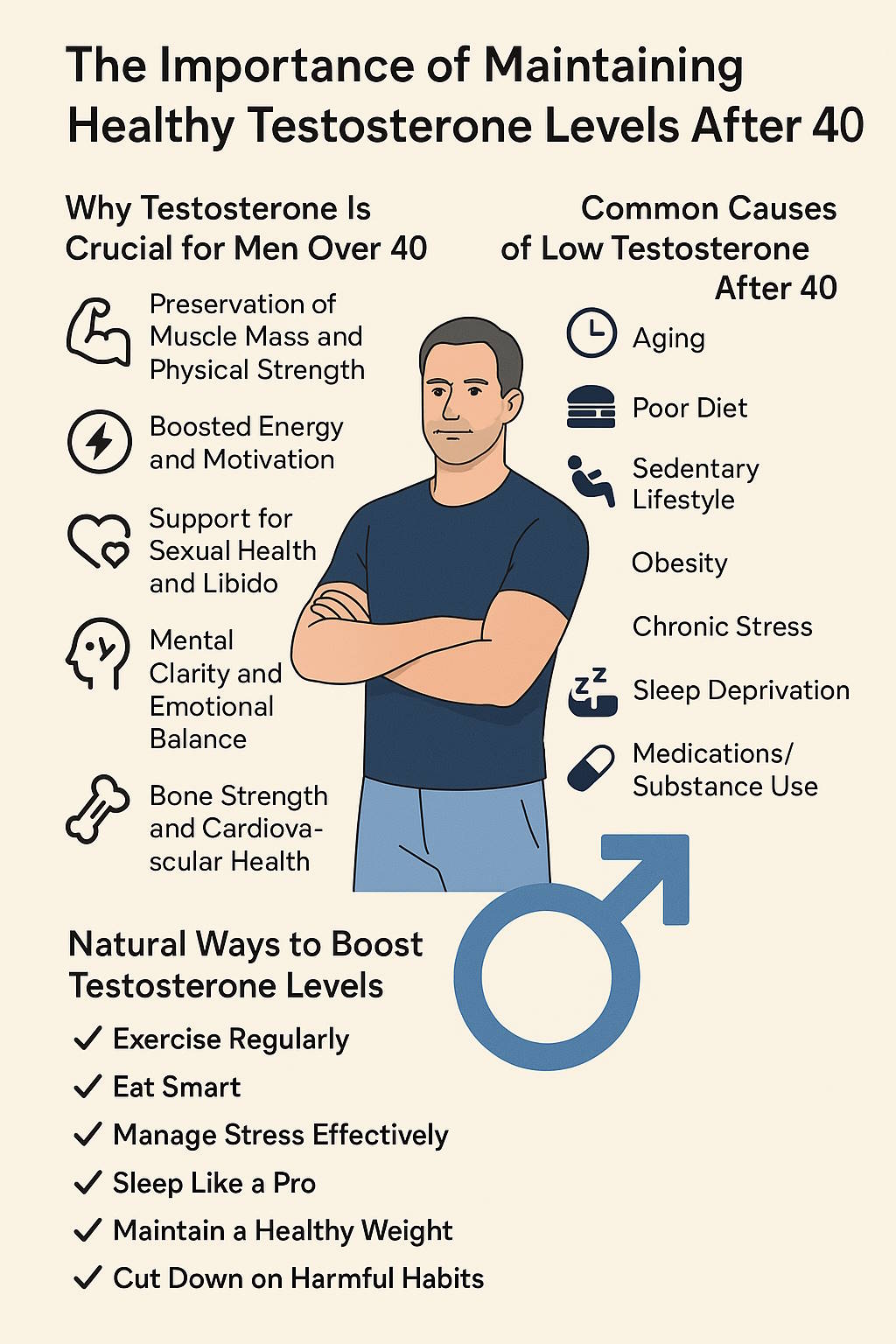
Common Causes of Low Testosterone After 40
Understanding the root causes can help you take preventative steps. These may include:
-
Aging: Natural decline with age.
-
Poor Diet: High sugar, processed food, or low micronutrient intake.
-
Sedentary Lifestyle: Lack of exercise reduces testosterone production.
-
Obesity: Excess fat converts testosterone into estrogen.
-
Chronic Stress: Elevated cortisol levels suppress hormone production.
-
Sleep Deprivation: Less than 6 hours per night affects testosterone.
-
Medications/Substance Use: Some prescriptions or alcohol/smoking can decrease levels.
Natural Ways to Boost Testosterone Levels
You don’t always need medication. Many lifestyle changes can significantly improve your hormonal health:
✅ Exercise Regularly
-
Focus on strength training 3–4 times a week.
-
Add HIIT (High-Intensity Interval Training) to increase hormone response.
✅ Eat Smart
-
Prioritize zinc-rich foods (e.g., beef, pumpkin seeds).
-
Get enough vitamin D from sunlight or supplements.
-
Balance healthy fats and proteins.
✅ Manage Stress Effectively
-
Practice meditation, deep breathing, or yoga.
-
Avoid multitasking and overstimulation from screens.
✅ Sleep Like a Pro
-
Aim for 7–9 hours of uninterrupted sleep nightly.
-
Create a consistent bedtime routine.
✅ Maintain a Healthy Weight
-
Lose belly fat to reduce estrogen conversion.
-
Use a combination of cardio and weight training.
✅ Cut Down on Harmful Habits
-
Limit alcohol to social occasions.
-
Quit smoking to improve circulation and hormone levels.
When to Consider Medical Support
Sometimes, lifestyle changes aren’t enough. In such cases, men may consider:
-
TRT (Testosterone Replacement Therapy): Requires professional supervision.
-
PCT (Post Cycle Therapy): For those previously using performance-enhancing drugs.
-
Supplements and Peptides: To support natural hormone production.
Always consult a certified specialist before beginning any treatment.
Take Charge of Your Hormonal Health
Maintaining healthy testosterone levels after 40 is essential—not just for muscles and sex drive, but for your energy, emotional well-being, and long-term health. Whether you’re noticing early signs of decline or simply want to stay ahead of the curve, it’s never too late to act.
Start with small but powerful changes: eat better, train smart, sleep well, and reduce stress. If needed, seek professional help and explore safe, guided therapies. Your health, vitality, and confidence are worth it.
Need help getting started? We offer free consultations, personalized training plans, nutrition advice, and safe hormonal support programs.
Contact us today or send your request now!